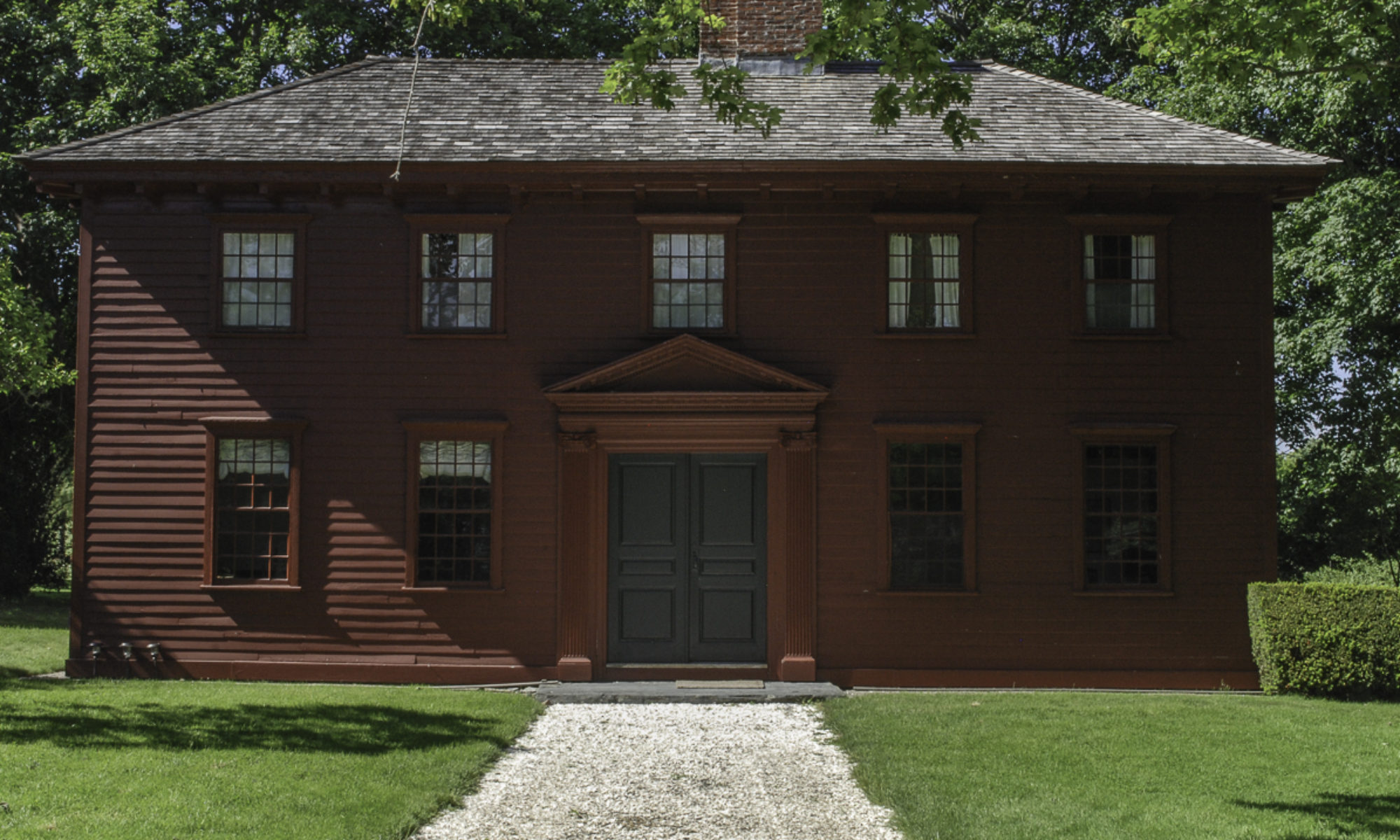
Whitehall is included in The National Society of The Colonial Dames of America’s Great American Treasures Alliance of more than 60 historical sites all across the country that help tell our nation’s remarkable story, including every twist and turn in the long, winding road that got us here. (www.nscda.org)
Built prior to 1729, Whitehall’s story is rich with the history of its most famous occupant, Dean George Berkeley, D.D. A theologian, philosopher, and educator: Berkeley’s legacy to history is extensive. Locally, his legacy is evidenced in Alciphron: or, The Minute Philosoher in Seven Dialogues written while living in the area. We see more of his local legacy through his relationship with the Society for the Propagation of the Gospel in Foreign Places, Trinity Church and the Redwood Library and Athenaeum. Who attended the meetings/gatherings that Berkeley and his wife Anne Foster hosted?
We are curious about who lived here before 1729, when Berkeley purchased the 94 acre farmstead; and who lived here after he gifted the property to Yale? What is their legacy?
To preservationists, the 300 year old structure and its evolution is remarkable. Berkeley renovated and added on to the house. From prints, paintings and photographs, we know that there were other additions to the main structure over time, as well as accessory buildings on the property. In this time, we ask: what is real and what is interpretation?
As a museum. the four main rooms on the first floor are displayed with furnishings, decorative arts and household goods that are appropriate to the time when Berkeley lived in house. How did they live in these spaces? Where were the stairs to the second floor and cellar? There are two attic spaces – how were they used and why are there tallow marks on the wall of one attic?
Whitehall is open to all visitors, particularly the curious-minded ! Please bring your questions and help add to our knowledge of Whitehall.